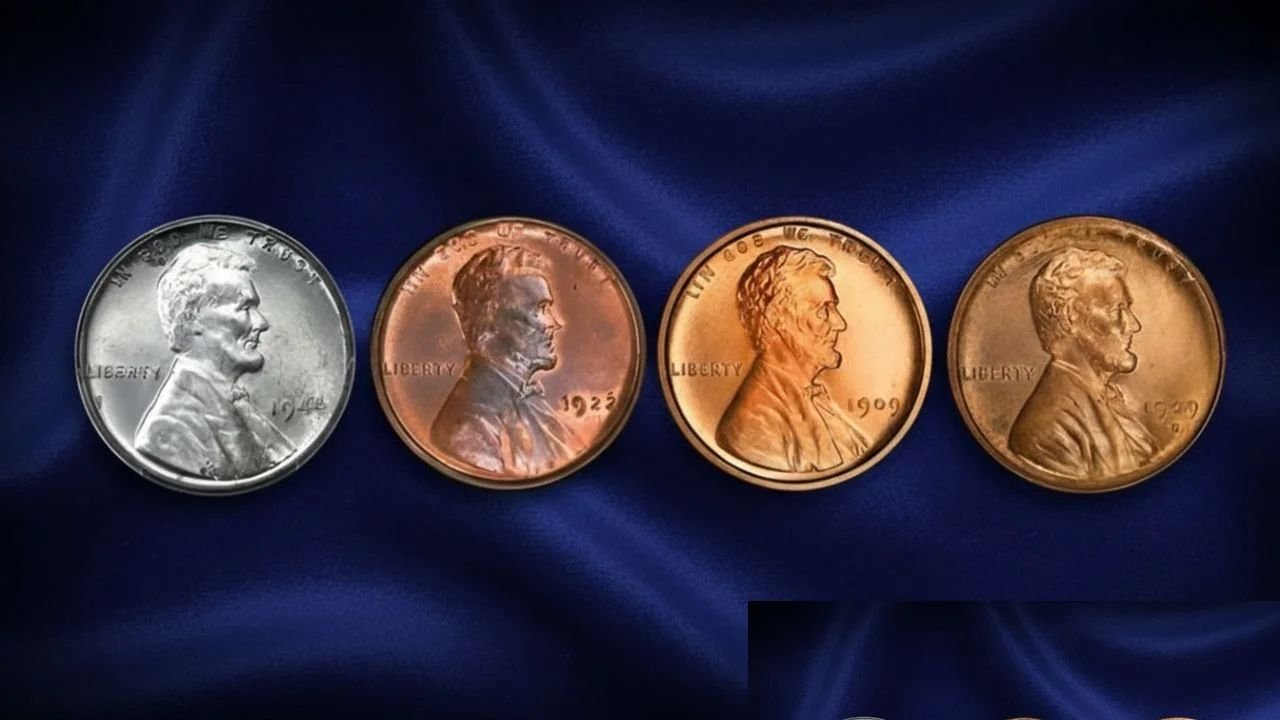
Lincoln Wheat Penny: The $11 Million Treasure Still Hidden in Circulation
The Lincoln Wheat Penny is one of America’s most iconic coins, bridging history, art, and everyday life. First minted in 1909 to honor Abraham Lincoln’s 100th birthday, it features a dignified profile of the president on the obverse and two wheat stalks framing the denomination on the reverse. While most of these pennies are common, certain rare varieties have become legendary, commanding extraordinary values among collectors. Some of these pennies, astonishingly, can still appear in circulation today.
A Century of American History in a Penny
- Designer: Victor David Brenner
- Years Minted: 1909–1958
- Composition:
- 1909–1942, 1944–1958: 95% copper, 5% tin & zinc
- 1943: zinc-coated steel (copper saved for WWII)
- Diameter & Weight: 19 mm, 3.11 grams
- Obverse: Lincoln’s portrait with “IN GOD WE TRUST,” “LIBERTY,” and date
- Reverse: Two wheat stalks with “ONE CENT” and “UNITED STATES OF AMERICA,” motto “E PLURIBUS UNUM”
The Wheat Penny circulated widely for decades, witnessing the 20th century’s major events while becoming a beloved collector’s item.
What Makes a Wheat Penny Valuable
Several factors drive value in this series:
- Rarity: Limited mintage or surviving specimens.
- Historical Significance: Coins linked to key years or events, like the WWII copper error.
- Condition (Grade): Uncirculated coins with original luster are exponentially more valuable.
- Errors & Varieties: Mis-strikes, doubled dies, or unusual metal compositions.
Legendary and Valuable Varieties
- 1909-S VDB: Struck at the San Francisco Mint with designer initials on the reverse. Extremely rare due to mid-year removal of VDB initials.
- 1943 Copper Penny: Wartime zinc steel pennies dominated 1943, but a few were accidentally struck in copper—these are among the most coveted U.S. coins.
- 1955 Doubled Die Obverse: A pronounced doubling of date and lettering on the obverse, a classic and widely recognized mint error.
Key Information Table
| Feature | Details |
|---|---|
| Years Minted | 1909–1958 |
| Key Mint Marks | D (Denver), S (San Francisco), none (Philadelphia) |
| Rare Dates | 1909-S VDB, 1914-D, 1922-D (Plain), 1931-S, 1943 Copper, 1955 Doubled Die |
| Composition | 95% Copper, 5% Tin/Zinc (most), 1943 Steel, 1943 Copper Error |
| Current Status | Common in circulation, but rare varieties are highly collectible |
Tips for Spotting Potential Treasures
- Check dates and mintmarks on the reverse below the wheat stalks.
- Look for errors or irregularities, such as doubled letters, off-center strikes, or unusual metal.
- Handle coins by the edges; do not clean. Even light cleaning can drastically reduce value.
- Consult price guides or online databases for preliminary valuation.
Importance of Professional Grading
For rare coins, authentication is critical. Reputable grading services like PCGS and NGC:
- Confirm authenticity
- Assign a grade (1–70 scale)
- Encapsulate the coin in tamper-proof holders
Professional grading ensures market confidence and can dramatically affect a coin’s auction price.
FAQs
Q1: Is it true a Wheat Penny is worth $11 million?
A: Extremely rare errors, like the 1943 copper penny, can command high prices, but verified sales over $1 million are more typical. The $11 million figure is sensationalized.
Q2: How can I tell if my 1943 penny is valuable?
A: Use a magnet—steel pennies are magnetic. Copper errors are non-magnetic. Never clean the coin and seek professional authentication.
Q3: Where is the mint mark on a Wheat Penny?
A: Below the wheat stalks on the reverse; D for Denver, S for San Francisco, none for Philadelphia.
Q4: What is the most valuable “normal” Lincoln Wheat Penny?
A: 1909-S VDB and 1914-D in high mint state grades. A top-condition 1909-S VDB can exceed $100,000.
Q5: How should a beginner start collecting Wheat Pennies?
A: Use a coin album or folder, sort through everyday change, invest in a guidebook, and practice identifying dates and mintmarks.
Conclusion: History Waiting to Be Found
The Lincoln Wheat Penny is more than a cent—it’s a piece of American heritage. From rare 1909-S VDBs to wartime copper errors, this series offers collectors a chance to hold history in their hands. With careful observation, patience, and a bit of luck, even an ordinary coin today could be a hidden treasure worth discovering.