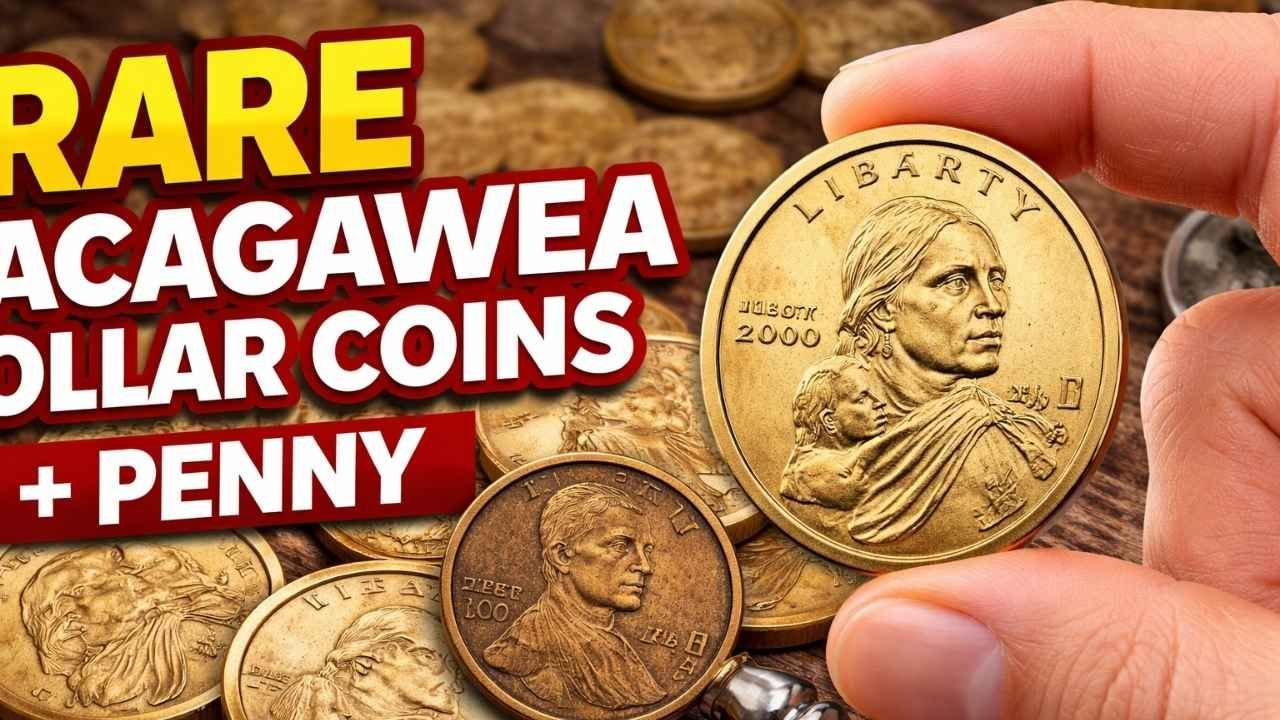
The Sacagawea Dollar debuted in 2000 as a bold attempt to reintroduce the dollar coin into everyday American life. Struck in a distinctive golden color, the coin honors Sacagawea, the Shoshone woman who guided the Lewis and Clark expedition. While it was created for circulation, certain Sacagawea Dollars have evolved into high-value collectibles—some worth thousands, and in rare cases, tens of thousands of dollars.
For discerning collectors and investors, these coins represent a fascinating intersection of history, artistry, and minting anomalies. Below is a closer look at 12 rare Sacagawea Dollar varieties that command serious attention in today’s numismatic market.
Why Sacagawea Dollars Attract Serious Collectors
Unlike many modern coins, the Sacagawea Dollar combines symbolic design with limited early mintages and notable mint errors. The obverse features a portrait of Sacagawea carrying her infant son, Jean Baptiste. From 2000 to 2008, the reverse displayed a soaring eagle. Beginning in 2009, the reverse designs changed annually to honor Native American contributions to U.S. history.
Collectors value these coins for three primary reasons:
- Distinctive golden composition
- Error varieties and transitional designs
- Strong grading premiums in Mint State condition
1. 2000-P “Cheerios” Sacagawea Dollar
One of the most famous modern U.S. coin varieties, the Cheerios Dollar was distributed in cereal boxes as part of a promotional campaign in early 2000. What makes it extraordinary is the enhanced eagle tail feather detail on the reverse—an early prototype design.
Only a limited number were released. High-grade certified examples regularly sell for thousands of dollars, and pristine specimens have achieved five-figure auction results.
2. 2000-P Wounded Eagle Variety
This variety features a dramatic die gouge that appears as a line across the eagle’s body, giving the illusion of a wound. The error is visible and distinctive, making it highly collectible.
Well-preserved examples often command strong premiums, particularly in Mint State grades above MS65.
3. 2000-P Sacagawea Dollar Mule Error
Among the most valuable modern U.S. coins, the Sacagawea Mule was mistakenly struck using the obverse of a Washington quarter and the reverse of a Sacagawea Dollar.
Only a small number are known to exist. These coins have sold for tens of thousands of dollars, with some examples surpassing six figures at auction. It remains one of the most iconic mint errors of the 21st century.
4. 2000-P Goodacre Presentation Dollars
Artist Glenna Goodacre, who designed the obverse portrait, was paid with specially burnished 2000-P Sacagawea Dollars. These coins have a distinctive satin-like finish and were not released into general circulation.
Certified examples tied to the Goodacre presentation group carry significant premiums due to their provenance and limited availability.
5. 2001-D Sacagawea Dollar (Low Mintage)
Compared to the initial 2000 release, 2001 mintages were dramatically lower. While not rare in circulated condition, high-grade uncirculated coins are more difficult to find.
Top-tier graded specimens, especially MS67 and above, can achieve impressive auction prices.
6. 2002-P and 2002-D Sacagawea Dollars (Collector-Only Release)
In 2002, the U.S. Mint stopped producing Sacagawea Dollars for general circulation and instead sold them only in collector rolls and sets. As a result, these coins saw limited distribution.
High-grade examples with strong eye appeal are increasingly desirable among registry set collectors.
7. 2003-P and 2003-D Sacagawea Dollars
Like the 2002 issues, these were not widely circulated. While common in lower grades, coins in exceptional condition—especially with flawless surfaces—can command notable premiums.
8. 2005-P Speared Bison Error
Although technically part of the Native American $1 Coin reverse series, this error is closely associated with the Sacagawea Dollar program. A die gouge creates the appearance of a spear running through the bison.
The Speared Bison has become one of the most recognized modern dollar errors and is highly sought after in certified Mint State condition.
9. 2007 Satin Finish Sacagawea Dollars
From 2005 to 2010, the U.S. Mint produced special satin-finish coins for annual mint sets. These differ from standard circulation strikes in texture and detail.
Collectors often overlook them, but in high grades, satin-finish examples can carry strong premiums.
10. 2008 Sacagawea Dollar (Final Eagle Reverse Year)
The 2008 issue marked the final year of the soaring eagle reverse design before the series transitioned to rotating Native American themes.
As the last of its kind, demand for high-grade 2008 coins continues to grow among completion-focused collectors.
11. 2009 Native American Dollar (Low Early Transition Interest)
The 2009 redesign launched the Native American reverse series. First-year transition coins often attract long-term collector interest.
Certain varieties with low mintages or exceptional grading populations are steadily increasing in value.
12. High-Grade Proof Sacagawea Dollars
Proof versions, struck with mirror-like finishes and sharp detail, were produced annually for collectors. While many proofs are common, coins graded PR70 by reputable services are far scarcer.
Perfect proofs with deep cameo contrast often command premium prices in competitive registry markets.
The Importance of Condition and Grading
In modern coin collecting, condition is everything. A Sacagawea Dollar worth face value in circulated condition may be worth hundreds—or more—if graded at MS67 or higher.
Professional third-party grading services provide:
- Authentication
- Standardized grading
- Encapsulation for preservation
For investors and advanced collectors, certified coins offer added market confidence and liquidity.
Market Trends and Investment Potential
The market for rare Sacagawea Dollars has matured over the past decade. As more collectors recognize modern mint errors and transitional varieties, demand continues to strengthen.
Several factors support long-term potential:
- Limited known examples of major errors
- Strong auction performance history
- Growing interest in modern U.S. coinage
- Cultural and historical relevance
While not every Sacagawea Dollar is valuable, select varieties have proven resilient in premium auction environments.
Preservation Strategies for Maximum Value
Proper storage plays a critical role in maintaining value. To protect your coins:
- Store in archival-quality holders
- Avoid direct handling of surfaces
- Keep coins in a stable, low-humidity environment
- Never clean or polish coins
Even minor surface damage can significantly reduce a coin’s value, particularly in high Mint State grades.
Final Thoughts
The Sacagawea Dollar began as a modern circulation coin but has developed into a compelling collectible with serious upside potential. From the legendary Cheerios Dollar to the extraordinary Mule error, these coins highlight how rarity and minting mistakes can transform everyday currency into high-value assets.
For sophisticated collectors, Sacagawea Dollars offer more than numismatic appeal—they represent a tangible piece of American history with measurable investment potential. Whether you are building a high-grade registry set or searching for elusive mint errors, this series continues to reward those who look closely and collect wisely.