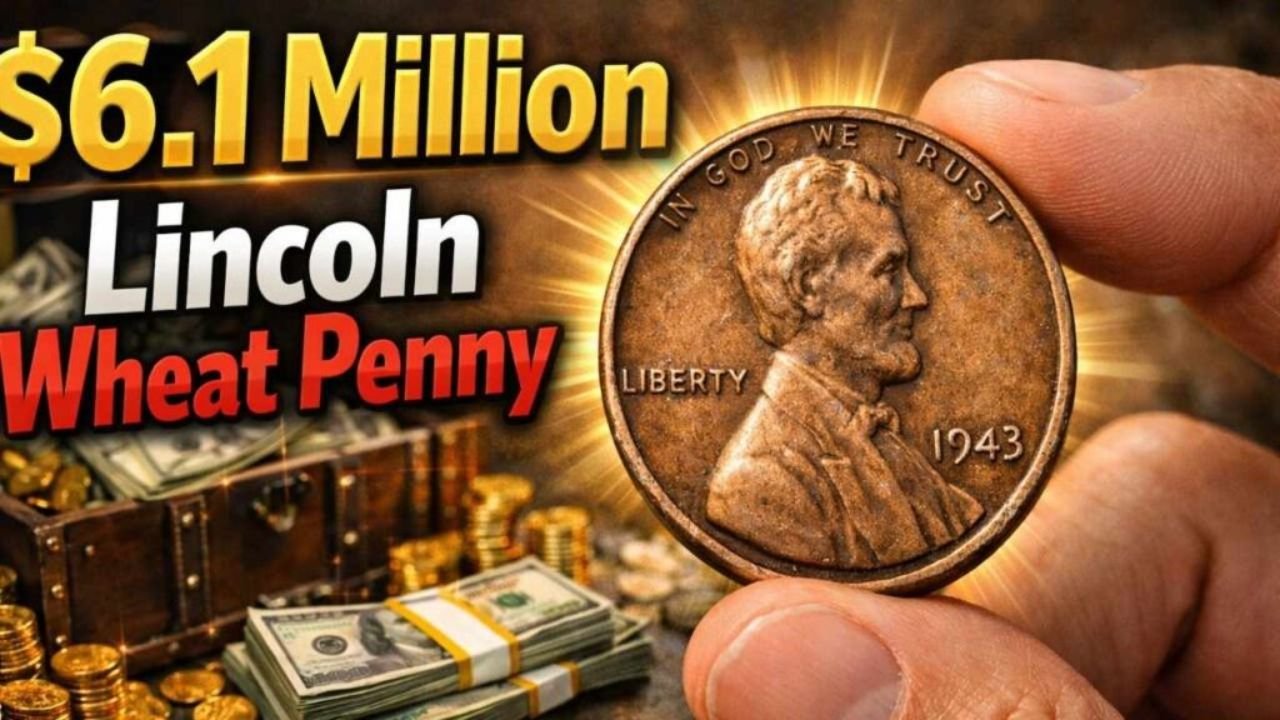
In the world of elite coin collecting, few stories capture attention like the Lincoln Wheat Penny valued at $6.1 million. It is a powerful reminder that even the smallest denomination in American currency can become a multimillion-dollar asset under the right circumstances.
For seasoned collectors and strategic investors, this legendary penny represents more than a remarkable price tag. It reflects rarity, historical relevance, flawless preservation, and the intense demand that defines the upper tier of numismatics.
The Origins of the Lincoln Wheat Penny
The Lincoln Wheat Penny was introduced in 1909 to commemorate the 100th anniversary of Abraham Lincoln’s birth. Designed by Victor David Brenner, it marked a historic shift in U.S. coinage as the first circulating coin to feature a real person rather than an allegorical figure.
The obverse displays Lincoln’s dignified profile, while the reverse features two wheat stalks framing the words “ONE CENT.” This design, symbolizing growth and prosperity, remained in circulation until 1958.
Over nearly five decades of production, billions of Wheat Pennies were struck. Yet within that massive output, a handful emerged as extraordinary rarities.
What Makes a Penny Worth Millions?
Most Lincoln Wheat Pennies are worth only a few cents above face value. However, certain coins achieve extraordinary valuations due to a combination of key factors.
1. Extreme Rarity
Coins with low surviving populations—whether due to limited mintage or unusual circumstances—carry inherent scarcity. When only a few examples exist, competition intensifies.
2. Unique Mint Errors
Minting mistakes can dramatically increase value. Wrong-metal strikes, doubled dies, or transitional composition errors often create one-of-a-kind coins.
3. Exceptional Condition

Condition plays a defining role in valuation. A rare coin preserved in near-perfect Mint State condition can multiply in value compared to a circulated example.
4. Historical Context
Coins tied to wartime production changes or transitional design shifts hold additional appeal for collectors.
When all these elements converge, a humble penny can become a headline-making treasure.
The Story Behind the $6.1 Million Penny
The Lincoln Wheat Penny associated with a $6.1 million valuation achieved its status due to its extraordinary rarity and preservation. While details of multimillion-dollar coins vary, such valuations typically involve transitional metal errors or exceptionally scarce varieties in elite condition.
For example, during World War II in 1943, pennies were struck in zinc-coated steel to conserve copper for the war effort. A small number of copper planchets from 1942 were mistakenly used, producing the famous 1943 copper cents.
These transitional errors are among the most valuable coins in American history. When authenticated and graded at the highest levels, they command staggering prices.
The $6.1 million figure reflects not just rarity, but the intense competition among high-net-worth collectors seeking trophy assets.
The Critical Role of Mint Errors
Mint errors are often the catalyst behind record-breaking coin sales. In the case of multimillion-dollar Lincoln Wheat Pennies, experts typically identify:
- Off-metal strikes
- Dramatic doubled dies
- Unique die pairings
- Transitional composition errors
Such anomalies are accidental byproducts of production. Their unintentional nature enhances their desirability, as they represent moments when the minting process deviated from perfection.
Collectors value these coins as mechanical anomalies frozen in time.
Condition and Professional Grading
Grading is essential in determining value at the highest levels of collecting. Professional services evaluate coins on a scale from 1 to 70, assessing:
- Surface preservation
- Strike sharpness
- Luster
- Eye appeal
A rare Wheat Penny graded MS65 may be worth a fraction of the same coin graded MS67 or higher. At multimillion-dollar levels, even minor differences in surface quality can significantly impact price.
Authentication also protects buyers in a market where counterfeits exist, particularly for famous coins like the 1943 copper cent.
Market Dynamics and Auction Power
The rare coin market functions similarly to the fine art market. When a trophy coin appears at auction, elite collectors compete aggressively.
Several forces drive record-breaking sales:
- Global participation in major auctions
- Growing interest in tangible assets
- Limited supply of elite-grade rarities
- Prestige associated with ownership
When two determined bidders compete for a unique coin, prices can escalate quickly.
The $6.1 million Lincoln Wheat Penny became a defining moment, reinforcing the perception of rare coins as serious alternative investments.
Other Legendary Lincoln Wheat Pennies
While the $6.1 million penny stands at the pinnacle, several other Lincoln cents have achieved remarkable valuations.
1943 Copper Penny
Perhaps the most famous error in U.S. coinage, authentic examples have sold for substantial sums due to their rarity and wartime origin.
1909-S VDB
With a low mintage of 484,000, this early key date remains a cornerstone of Lincoln cent collecting.
1955 Doubled Die Obverse
This dramatic doubled die variety is visible without magnification and continues to attract strong demand.
These coins demonstrate that rarity and visibility often combine to create sustained market appeal.
Investment Potential of Rare Pennies
High-value coins are increasingly viewed as portfolio diversifiers. Unlike stocks or digital assets, rare coins offer tangible ownership backed by historical significance.
Benefits include:
- Finite supply
- Long-term collector demand
- Global market access
- Intrinsic metal content (in some cases)
While not without risk, premium coins with established track records tend to show resilience during economic fluctuations.
Preservation: Protecting Elite Assets
Maintaining condition is essential for preserving value.
Best practices include:
- Storing coins in certified holders
- Maintaining stable temperature and humidity
- Avoiding direct handling
- Never cleaning the surface
Improper cleaning can permanently damage a coin’s surface and significantly reduce its value.
The Enduring Appeal of the Lincoln Wheat Penny
Beyond financial considerations, the Lincoln Wheat Penny holds deep cultural resonance. It symbolizes leadership, resilience, and American heritage. For over a century, it has passed through countless hands, witnessing generations of change.
The idea that one of these small copper coins could be worth $6.1 million captures the imagination. It speaks to the power of rarity, preservation, and human fascination.
Final Thoughts
The $6.1 million Lincoln Wheat Penny is more than a remarkable auction result. It is a testament to the enduring strength of the rare coin market and the extraordinary potential hidden within everyday currency.
For collectors and investors, the lesson is clear: rarity matters, condition is paramount, and history adds immeasurable depth. In numismatics, even the smallest coin can become a world-class asset when scarcity and demand align.